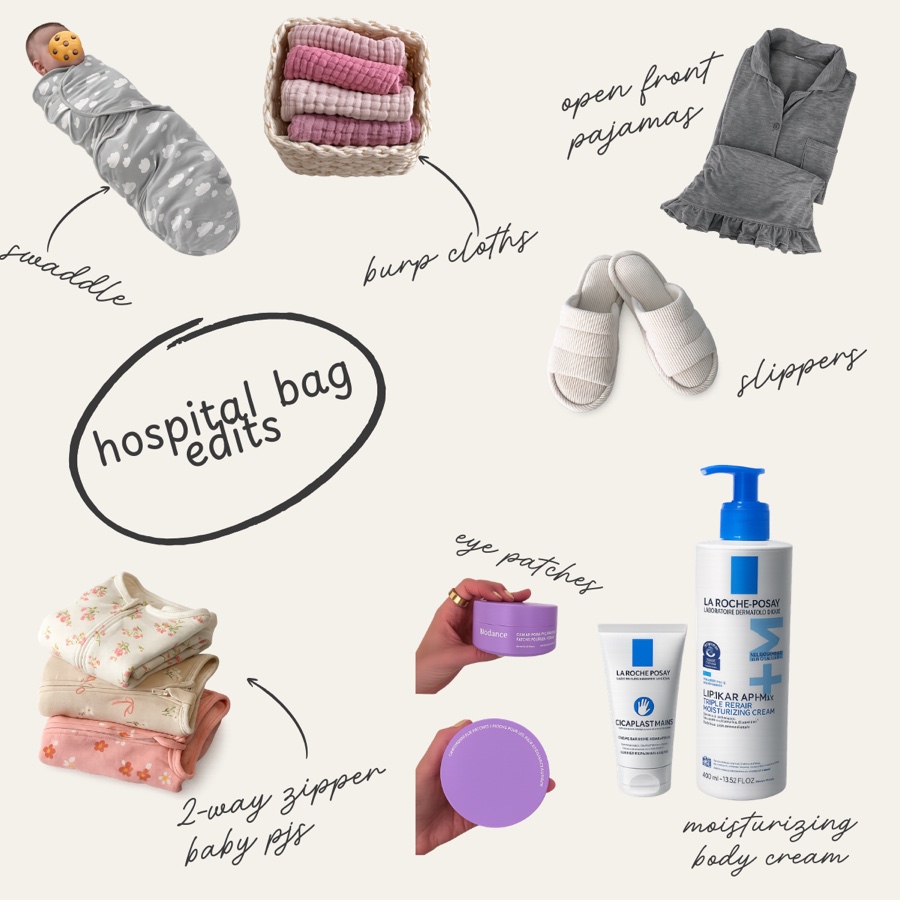
Packing a hospital bag made everything feel a little more real. I wanted to keep mine practical: comfortable basics for recovery, easy outfits for feeding and resting, and just enough for the baby’s first days. These are the hospital bag edits I would pack for mom and baby, along with a reminder to check your hospital’s list because many provide diapers, wipes, postpartum supplies, and other essentials.
For Mom
Breastfeeding Bras
A soft breastfeeding bra is an easy hospital-bag essential. These are seamless, comfortable, lightweight, and soft, with adjustable straps for a better fit. They make breastfeeding more convenient without adding anything stiff or restrictive while you rest and recover.
Open-Front Pajamas
Soft pajamas with an open or button front make skin-to-skin time, breastfeeding, and postpartum checks much easier. I would pack a comfortable set plus an extra option in case of spills or little messes. Choose something loose, easy to put on, and suitable for the temperature in your room.
High-Waisted Cotton Underwear
These are cotton, soft, stretchy, and high-waisted, which makes them a comfortable choice for postpartum recovery. Bring a few pairs you will not mind getting messy, and remember that your hospital may also provide disposable postpartum underwear.
Slippers
A comfortable pair of slippers is useful for walking around your room and the hospital hallways. These feel super comfortable, and I recommend sizing up half a size for a roomier fit. If possible, choose a pair with nonslip soles.
Moisturizing Body Cream
Hospital air and postpartum changes can leave skin feeling especially dry, so a moisturizing body cream is a nice comfort to pack. This one can also work for the family, but always check the ingredients and ask your pediatrician before using any skincare product on or near your baby.
Bio-Oil Natural Skincare Oil
I started using this oil on the day I found out I was pregnant and kept it in my everyday skincare routine. The blend of natural oils helped keep my skin feeling hydrated, and I felt it helped minimize the appearance of my stretch marks. Results are different for everyone, but it became a comforting little ritual for me.
A Comfortable Going-Home Outfit
Pack one loose, comfortable outfit for the trip home. Your body will still be recovering, so think soft fabrics, a relaxed waistband, comfortable shoes, and layers that are easy to add or remove. A maternity outfit is often the most comfortable choice.
For Baby
Warm Clothes
Pack a soft hat, a pair of socks, and a warm layer to help keep your baby cozy in the hospital and on the way home. Newborns can lose body heat quickly, so it is helpful to have these little extras ready, especially in cooler weather or air-conditioned rooms. Choose breathable layers that are easy to add or remove, and follow your care team’s guidance so your baby stays comfortably warm without overheating.
Two-Way-Zipper Baby Pajamas
Two-way zippers are a lifesaver for diaper changes, especially when you are sleepy and learning a brand-new routine. These pajamas are made from 100% cotton and come in cute designs. Pack a couple in newborn and 0–3 month sizes because it is hard to predict exactly what will fit best.
Swaddles
These swaddles are easy to use and made from 100% cotton. They can help a newborn feel cozy during those first months, but always follow safe-sleep guidance, place baby on their back, keep the sleep space clear, and stop swaddling when baby shows signs of trying to roll.
Pacifier
If you plan to use a pacifier, pack one so it is ready when you want it. Every baby and feeding journey is different, so ask your care team or pediatrician if you have questions about when to introduce it.
Final Thoughts
The best hospital bag is the one that helps you feel comfortable without becoming one more thing to manage. Start with your hospital’s checklist, then add a few personal favorites: soft pajamas, breastfeeding bras, comfortable underwear, slippers, skincare, an easy outfit for home, and simple clothes and swaddles for the baby. Pack what gives you peace of mind, leave room for the supplies the hospital sends home, and remember that your support person can always bring something later if you need it.